 Indian National Congress
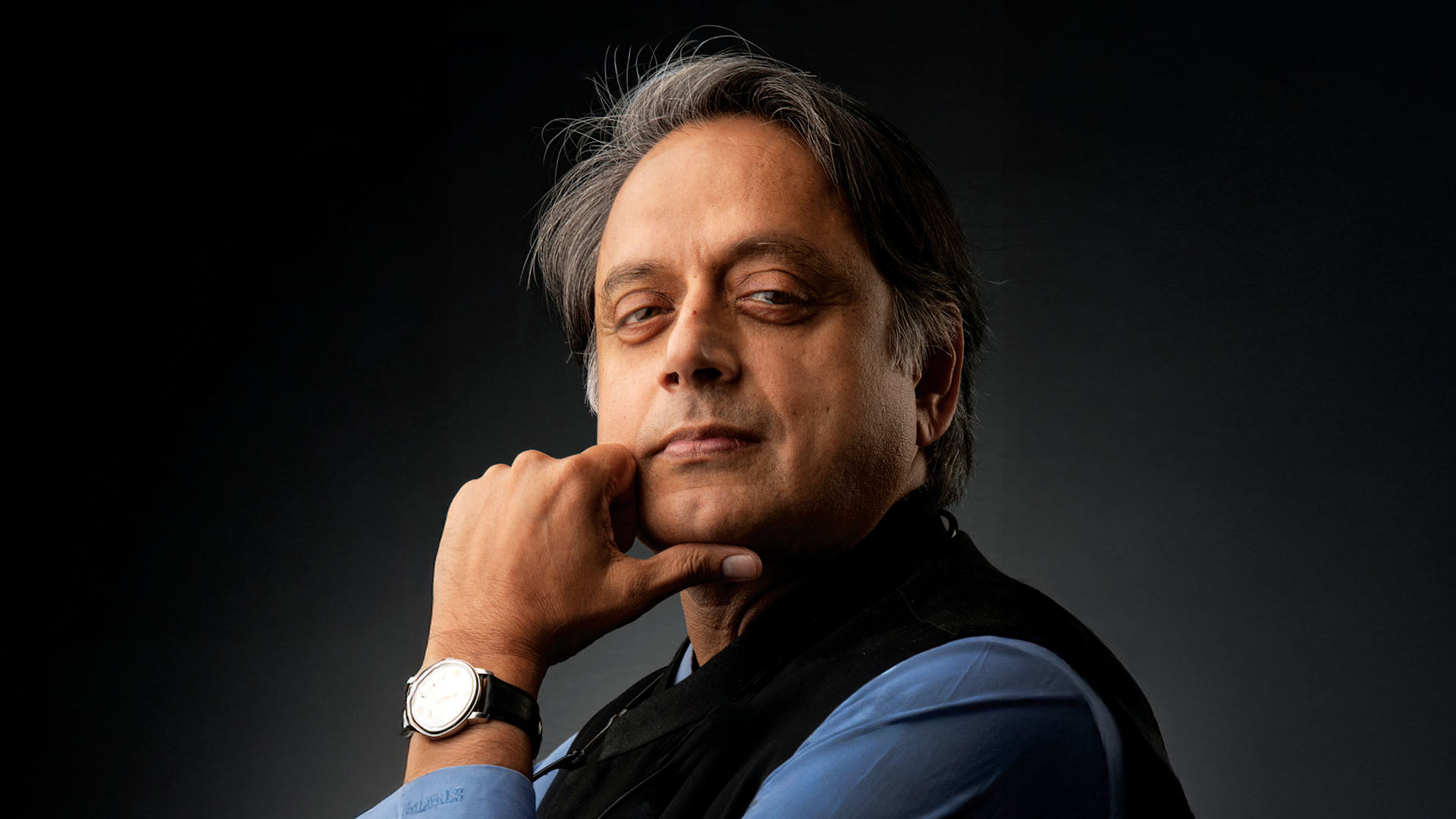
Shashi Tharoor
Member of Parliament for Thiruvananthapuram; author; former Under-Secretary-General of the United Nations.
Shashi Tharoor at the Stanford India Conference 2026 roundtable — on acceptance over tolerance, powerless mayors, the hard line between welfare and freebies, and the map of Parliament itself.
Indian National Congress
Member of Parliament for Thiruvananthapuram; author; former Under-Secretary-General of the United Nations.
 Bharatiya Janata Party
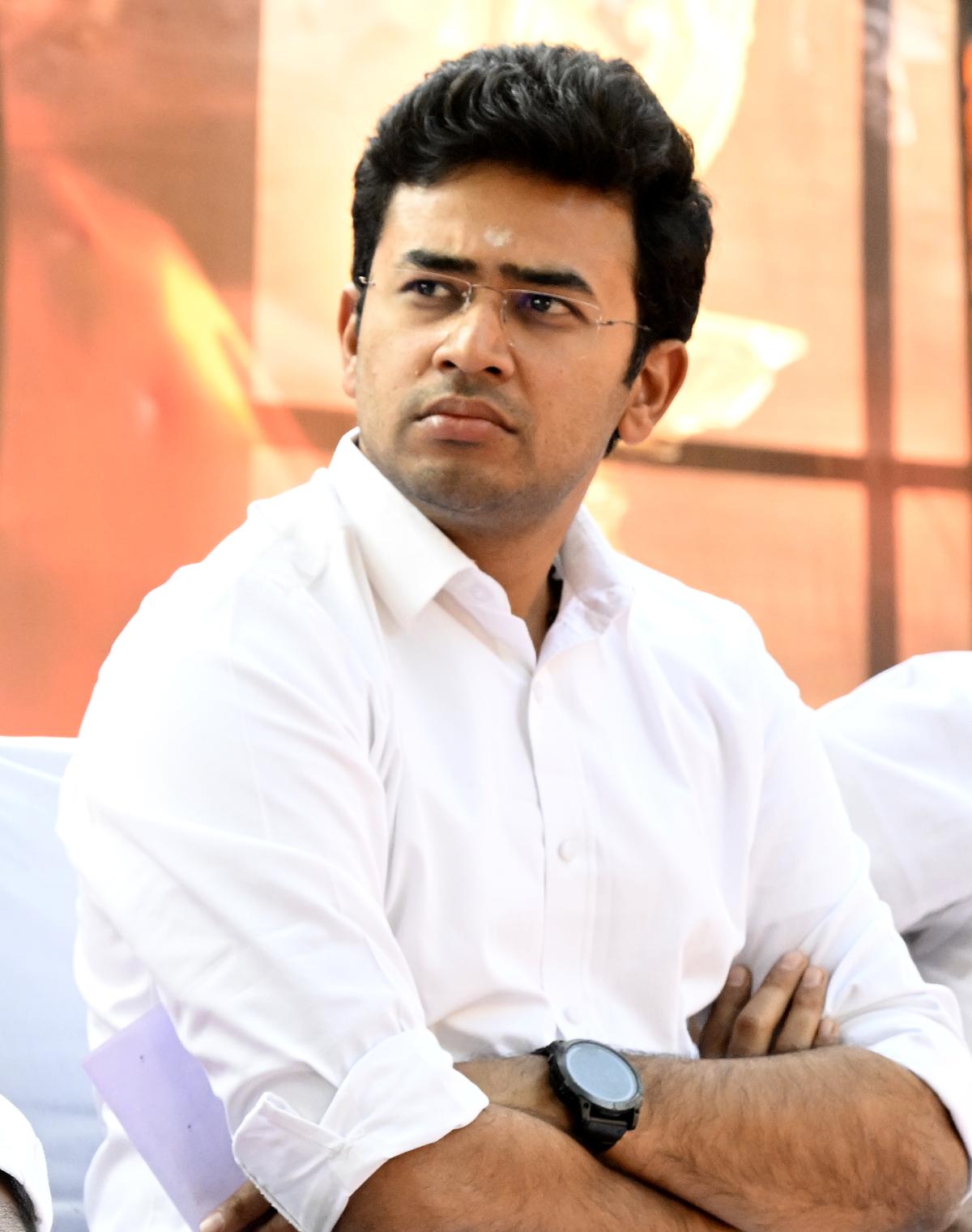
BJP leader, arguing the case for a larger Parliament and against targeted minority schemes.
 Bharatiya Janata Party
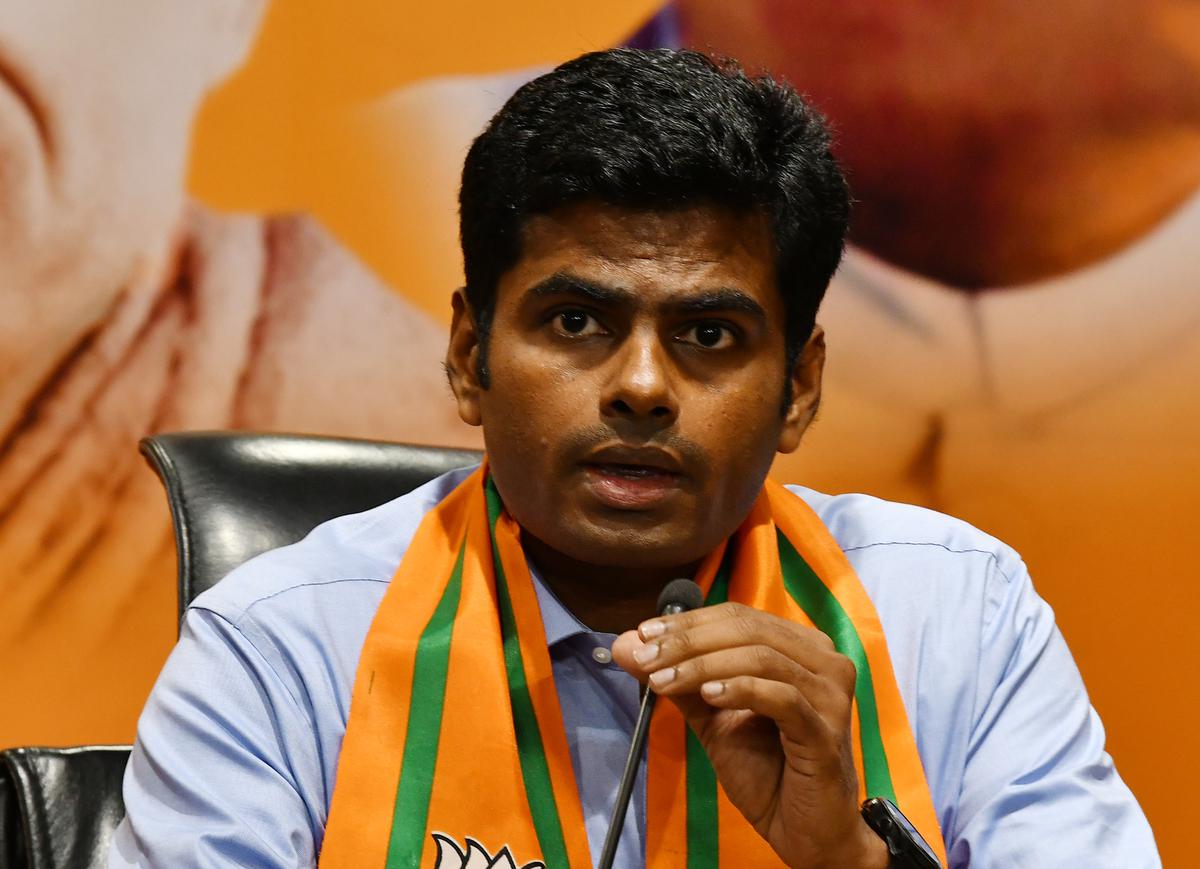
Former president of the Tamil Nadu BJP, defending the Bengal roll revision as a court-monitored correction.
Shashi Tharoor shared the stage with BJP leader Tejasvi Surya and former Tamil Nadu BJP president K. Annamalai at Stanford University this May, in a wide-ranging roundtable moderated by Stanford PhD student Samyukta Shrivatsa. The panel covered identity, urban governance, welfare economics, and the redrawing of India’s parliamentary map — and Tharoor staked out clear positions on all four.
Tharoor opened the identity discussion by arguing that national cohesion does not require ideological compromise if India follows Swami Vivekananda’s principle of acceptance rather than tolerance. He described tolerance as fundamentally patronizing: it suggests one group holds the ultimate truth and magnanimously permits the other to be wrong. Vivekananda’s vision, he emphasized, asks something different — respecting that others hold their own truths, and so fostering mutual respect rather than conditional endurance.
Tharoor used Kerala’s history to illustrate how pluralism works naturally when diverse communities live alongside each other. He highlighted that the Jewish community in Kerala lived free from anti-Semitic persecution, and referenced the peaceful arrival of St. Thomas the Apostle in Kerala — contrasting it, lightheartedly, with other regions.
Islam, he went on to explain, came to Kerala through centuries of peaceful Arab maritime trade rather than military conquest. When the local Muslim community grew large enough to need a mosque, the Hindu ruler — the Zamorin — gave them a disused temple. The oldest mosque outside the Arab world, in Kodungallur, still keeps a traditional Kerala lamp at its entrance. His political warning was blunt.
“It takes only 1% of a population feeling they have no stake in society to make a country ungovernable.” Shashi Tharoor
When Surya criticized policies like Karnataka’s minority colony development fund as “state-sponsored ghettoization,” Tharoor pushed back. The disproportionate poverty and underrepresentation of Muslim communities in North India is, in significant part, a legacy of Partition, he argued — the Muslim middle class largely departed for Pakistan, and targeted support is a response to that structural reality, not its cause.
On the Special Intensive Revision of voter rolls in West Bengal, which Annamalai defended as a fair, court-monitored correction of decades of fraudulent registrations, Tharoor countered with numbers: 34 lakh people filed appeals claiming they were legitimate voters, but only a few hundred were heard before the election went ahead. He noted that the BJP won Bengal by a margin of 30 lakh votes regardless.
Tharoor was most pointed on urban governance, an issue on which all three panelists largely agreed. He said Indian mayors are “glorified chairs of powerless committees,” with the real authority resting in municipal commissioners who report to chief ministers — a structure he traced to a colonial design meant to keep Indians from holding genuine power. He has introduced a private member’s bill in Parliament pushing for directly elected mayors with real budgetary authority, a position he shared with Surya, if not with Annamalai’s more state-focused diagnosis.
“Indian mayors are glorified chairs of powerless committees.” Shashi Tharoor, on urban governance
Describing himself as being on the “right wing” of the Congress party on economic matters, Tharoor was candid about his own state’s finances: Kerala is functionally insolvent, borrowing every year by September just to cover salaries. Still, he argued that the line between “essential welfare” and “freebies” is genuinely difficult to draw in a democracy where a majority of voters live near subsistence.
He cited former Andhra Pradesh chief minister Chandrababu Naidu as a cautionary tale: Naidu made the honest, fiscally responsible case against competitive rice subsidies in the 1990s, and promptly lost re-election.
The panel’s most substantive policy exchange concerned delimitation — the redrawing of Lok Sabha constituencies, frozen since the 1971 census, which has left northern states with far larger constituencies than the south. A new census will trigger a delimitation that could shift parliamentary weight decisively toward the Hindi heartland.
Tharoor laid out three possible frameworks:
He flagged what he called an inversion unique to India’s federal math: the country’s biggest fiscal contributors, like Karnataka, Tamil Nadu, and Kerala, are also among its less populous states. Delimitation, as currently structured, would simultaneously shrink their political weight and their fiscal returns. He rejected Surya’s counter-proposal to expand Parliament from 543 to 850 seats, arguing a chamber that large would be unable to debate or deliberate effectively.
Tharoor ended by urging the audience, largely students and members of the Indian diaspora, to stay civically engaged — describing the diaspora as a “national reserve” that carries real responsibilities toward India’s future.
Commentary, event invitations, and the occasional dispatch on US–India affairs — sent to your inbox on Sundays.